


Drug Abuse
FDA denies approval to wider use of J&J’s blood clot preventer

|
The U.S. Food and Drug Administration denied an approval to a wider use of Johnson & Johnson’s heart drug Xarelto.
The blood-clot preventing drug is already approved for use in multiple indications.
J&J’s unit Janssen Research & Development was seeking approval for using the drug to reduce the risk of heart problems, such as heart attack, stroke or death, in patients with acute coronary syndrome and to reduce the risk of stent thrombosis - a blood clot at the site of the stent.
FDA Warns of Potential Risk of Severe Liver Injury With Use of Dronedarone
|
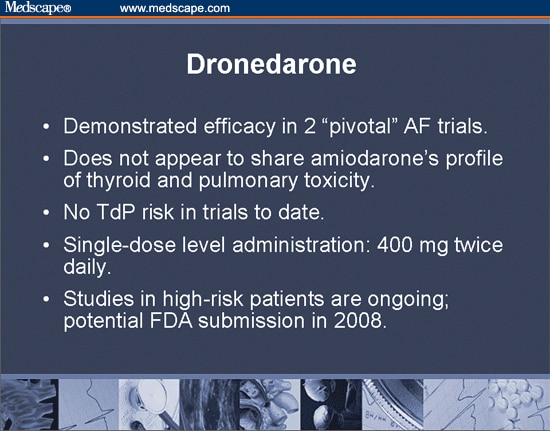
The US Food and Drug Administration (FDA) is notifying healthcare professionals and patients about cases of rare, but severe liver injury, including 2 cases of acute liver failure leading to liver transplant, in patients treated with dronedarone (Multaq).
Information about the potential risk of liver injury from dronedarone is being added to the WARNINGS AND PRECAUTIONS and ADVERSE REACTIONS sections of the dronedarone labels.
Dronedarone was approved with a Risk Evaluation and Mitigation Strategy (REMS) with a goal of preventing its use in patients with severe heart failure or who have recently been in the hospital for heart failure. In a study of patients with these conditions, patients given dronedarone had a greater than 2-fold increase in risk of death.
Healthcare professionals were reminded to advise patients to contact a healthcare professional immediately if they experience signs and symptoms of hepatic injury or toxicity (anorexia, nausea, vomiting, fever, malaise, fatigue, right upper quadrant pain, jaundice, dark urine, or itching) while taking dronedarone.
Statin label to carry diabetes warning
|
|
All statin labels will now include a warning about a small increased risk for elevated blood glucose levels and possible problems with transient memory and cognition, the FDA announced today.
The agency will also remove existing recommendations to perform routine liver function tests on all patients taking the cholesterol-lowering medications, after concluding, “serious liver injury with statin use is rare and unpredicatable.”
“We want health care professionals and patients to have the most current information on the risks of statins, but also to assure them that these medications continue to provide an important health benefit of lowering cholesterol,” Mary Parks, MD, of the FDA’s Center for Drug Evaluation and Research, said in a press release.
A mobile device for preventing and treating drug use
|
|
Imagine a device combining sensors to measure physiological changes. Then imagine a smartphone with software applications designed to respond to your bodily changes in an attempt to change your behavior. That is the vision behind “iHeal,” currently being developed¹ by Edward Boyer from the University of Massachusetts Medical School in the US, and his colleagues. The multimedia device is an innovative combination of ‘enabling technologies’ which can detect developing drug cravings and intervene as the cravings develop to prevent drug use. Boyer and team’s preliminary data and key findings² to date are published online in Springer’s Journal of Medical Toxicology.
So called ‘enabling technologies’ - artificial intelligence, continuous physiological monitoring, wireless connectivity, and smartphone computation - exist to make behavioral interventions more effective outside the clinic or office environments. In everyday, natural environments, they can detect changes in an individual’s biological and affective states, which could well be trigger points for risky health behaviors, such as substance use.
White House announces plans to reduce prescription drug abuse
|
|
President Barack Obama’s administration unveiled on Tuesday a plan to fight what it calls a prescription drug abuse epidemic.
Between 2002 and 2009, the number of Americans aged 12 and older abusing pain relievers increased by 20 percent, according to the Substance Abuse and Mental Health Services Administration.
“Unintentional drug overdose is a growing epidemic in the U.S. and is now the leading cause of injury death in 17 states,” Center for Disease Control Director Dr. Thomas Frieden was quoted as saying in a statement from the White House’s Office of National Drug Control Policy.
Vioxx harmful even after patients stopped taking it
|
|
Merck’s withdrawn painkiller Vioxx may have continued to cause blood clots and perhaps deaths even after patients dropped it, U.S. researchers said Monday.
The drug was recalled by Merck in 2004 after a colon-polyp prevention study showed it increased the risk of heart disease and death in users. But over the five years it was on the market, researchers estimate it caused nearly 40,000 deaths.
The new findings, published in the Archives of Internal Medicine, are based on data made available by Merck during multibillion-dollar litigation against the company.
Diabetes drugs warning: they cause heart problems
|
|
Widely used diabetes drugs appear to increase patients’ risk of potentially fatal heart problems, according to a study conducted by researchers from Imperial College London and published in the British Medical Journal.
Researchers examined patient and prescription records to examine rates of heart failure, heart attack and death from any cause among 900,000 patients taking all different kinds of diabetes drugs. Patients were followed for an average of seven years each.
Diabetes drugs fall into three classes: sulphonyureas, glitazones and biguanides. The sulphonyureas include chlorpropamide, glibenclamide (marketed as Daonil and Euglucon), gliclazide (marketed as Diamicron), glimepiride (marketed as Amaryl), glipizide (marketed as Glibenese and Minodiab) and tolbutamide.
FDA warns against fake online H1N1 remedy claims
|
|
The U.S. government this week warned against the online marketing of unlicensed health remedies claiming to protect against H1N1 swine flu infection, including fake “Tamiflu” pills from India.
The Food and Drug Administration reported on Thursday that it had purchased and analyzed several products represented on the Internet as Tamiflu, Roche Holding AG’s brand name version of the antiviral drug oseltamivir.
One order, which arrived in an unmarked envelope from India, consisted of unlabeled white pills that contained talc and the common pain reliever acetaminophen, the FDA said. Others contained various amounts of oseltamivir but were not approved for use in the United States.
Row brews over ecstasy downgrade call
|
|
The government’s narcotics advisory body called on Wednesday for a cut in the penalties for using and selling the dance drug ecstasy, a recommendation the Home Office has already said it will ignore.
The 31-member Advisory Council on the Misuse of Drugs (ACMD) said in a report that ecstasy should be downgraded to a class B drug from the most serious class A category.
“After looking at all the evidence presented to us and considering the harmfulness to individuals and society alongside other drugs within the same classification, the ACMD concluded that (ecstasy) should be reclassified to a class B drug,” said the advisory council’s chairman David Nutt.
FDA lacks access to food safety records: Congress
|
|
The U.S. Food and Drug Administration lacks access to food safety tests that could have helped identify problems at a peanut plant at the center of one of the biggest food recalls in U.S. history, members of Congress said on Thursday.
The salmonella outbreak traced to a Peanut Corp. of America plant in Blakely, Georgia, has sickened more than 550 people, more than half of them children, and may be linked to eight deaths.
“We would like to have more information. There is no question,” Stephen Sundlof, director of the FDA’s Center for Food Safety and Applied Nutrition, told a hearing of the Senate Agriculture Committee.
Man says prescription drug caused gambling problem
|
|
A former Wall Street banker who said he lost $3 million from compulsive gambling caused by a popular drug used to treat Parkinson’s disease is suing companies involved with the drug for his losses.
The lawsuit, filed in New York State Court on Tuesday, accuses the privately held German drugmaker Boehringer Ingelheim, Pfizer and Pharmacia & Upjohn of breach of warranty, negligence and negligent misrepresentation.
Randolph Simens, 55, said that he took the drug, Mirapex, from 2002 to 2007 after being diagnosed with Parkinson’s disease and suffering hand tremors.
Rash most common side effect in Vectibix trials
|
|
The most common side effect observed in ongoing trials of Amgen Inc’s cancer drug Vectibix is skin rash, according to interim analyses of pivotal trials of the drug in colorectal cancer released on Thursday.
Vectibix is already approved in the United States for treating colon cancer patients who have stopped responding to chemotherapy, and Amgen is studying the drug in earlier stages of the disease, as well as in other types of cancer.
One Phase III study of Vectibix, also known as panitumumab, is looking at its effectiveness as a first-line treatment in combination with a chemotherapy regimen known as Folfox, compared with chemo alone.
Man jailed for fake Viagra sales
|
|
The general manager of a Shanghai chemical company was jailed for two years on Thursday for selling fake tablets of the male impotence drug Viagra on the Internet, the official Xinhua news agency reported.
Program helped doctors identify OxyContin abusers
|
|
Careful monitoring of patients taking powerful but addictive pain relievers like OxyContin helped doctors identify abusers and steer them toward treatment, U.S. researchers said on Wednesday.
The key was having a standardized program applied to all patients who were getting the drugs for conditions other than cancer.
“Physicians are not very good at predicting which patients will have problems. They want to trust the patient, and unfortunately, trust does not work well in this type of treatment,” said Dr. Jennifer Meddings of the University of Michigan, who presented her findings at a meeting of the Society for General Internal Medicine in Pittsburgh.
Inhaled insulin linked to lung cancer: Pfizer
|
|
Clinical trials of the inhaled insulin product Exubera revealed an increase in the number of lung cancer patient, leading Nektar Therapeutics to end talks with potential partners to market the product, Pfizer Inc and Nektar said on Wednesday
Over the course of the clinical trials, Pfizer said 6 of the 4,740 Exubera-treated patients versus 1 of the 4,292 patients not treated with Exubera developed lung cancer. One lung cancer case was also found after Exubera reached the market.
Pfizer updated the Exubera labeling to include a warning with safety information about lung cancer cases found in patients who used Exubera, which U.S. regulators approved in January 2006.


