
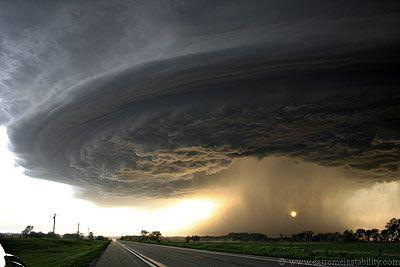
Europe needs to plan for future probabilities of extreme weather. Heat waves, floods and storms do not respect national frontiers, so there is a need for action at both national and EU levels.
The IPCC has advised that the frequency of many types of extreme weather events will continue to grow globally in coming years. Now the national science academies of EU Member States bring into focus for the first time the scale of the challenge in Europe. Highlighting a 60% rise over the last 30 years in the costs of damage from extreme weather events across Europe, EASAC warns of the grave economic and social consequences if European policy makers do not use the latest estimates of future droughts, floods and storms in their planning while adapting to global warming and the resulting climate disruption.
"Given the tragic events this year in the rest of the world and the recent IPCC report, EASAC feels obliged to draw attention to the growing impact of extreme weather in Europe," says EASAC President Sir Brian Heap. "This EASAC report follows a highly detailed assessment by a group of Europe's leading experts on climate (headed up by the Norwegian Academy of Science and Letters and the Norwegian Meteorological Institute) of historic and likely future changes in extreme weather over Europe. From the major loss of lives in heat waves to the economic and human costs of floods and storms, the implications are worrying. They present the European Union and its Member States with significant challenges in preparing Europe for a future with greater frequency of extreme weather. In planning to adapt to such a future, it is critical to use the latest scientific knowledge on how different types of extreme events are expected to develop. This depends not only on the type of event but also where in Europe is being considered since the EU's 28 countries and over 500 million population live in very different climate zones, from the Mediterranean sub-tropical to the Arctic."
The EASAC report identifies 5 areas requiring immediate EU-driven action:
Heat-waves. We need to prepare for heat-waves and how to reduce the deaths experienced in previous years by further studies of the factors affecting health outcomes.
Flood defence and early warning. Good practice in flood preparedness and zoning for flood defence across Europe should be established. In a number of coastal areas, the risk from storm surges will increase significantly as sea level continues to rise. Agriculture. Extremes of flood and drought have major effects on agriculture, and potential measures to increase resilience should be produced and applied through national or regional adaptation strategies.
Climate research. The EASAC report details what we know of current trends and the probabilities of future events. However, there continue to be many areas of uncertainty which European society needs to reduce to plan for its future. EU wide climate research thus needs to be encouraged and strengthened.
Adaptation Plans. Individual Member States will need to develop and share information on National Climate Change Adaption Plans, but joint EU action is also essential because these events do not respect national barriers.
"Looking at the science, global climate model outputs have proved of immense value in providing the basis for understanding climate and its future," continues Sir Brian, "However, there is an urgent need to improve regional climate models to reduce uncertainties and improve projections, for example extreme precipitations or hail storms and other local climatic phenomena such as tornadoes remain imperfectly understood. The EU has a critical role in strengthening European climate-research communities and building networks across borders and disciplines to provide the data required for informed future policy-making. "
###
The full report can be downloaded from the EASAC website http://www.easac.eu from 2 December 2013. The report will be launched in Brussels during an official event at the Norwegian Mission to the EU, at 12:00 noon on 2 December.
EASAC is formed by the national science academies of the EU Member States, to collaborate in giving advice to European policy‐makers. EASAC provides a means for the collective voice of European Science to be heard. Through EASAC, the academies work together to provide independent expert, evidence‐based advice about the scientific aspects of European policies to those who make or influence policy within the European institutions.
Contact:
Sofie Vanthournout
Head of Brussels Office
sofie.vanthournout@easac.eu
+32 2 550 23 32
Richard Hayhurst
Head of Communications
richard@richardhayhurstassociates.com
+44 7711 821 527
###
Richard Hayhurst
richard@richardhayhurstassociates.com
44-771-182-1527
Richard Hayhurst Associates