


Stress
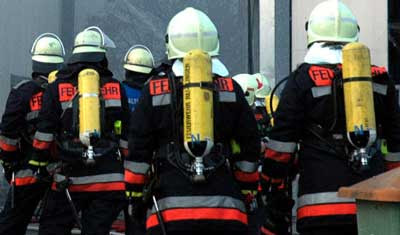
Older Firefighters May Be More Resilient to Working in Heat
|
Older firefighters who are chronically exposed to heat stress on the job could be more heat resilient over time. A recent study published in the December issue of the Journal of Occupational and Environmental Hygiene (JOEH) found that older firefighters may be able to tolerate more challenging or arduous work environments before they feel affected by the heat, compared to non-heat-exposed workers who would need to stop work prematurely.
“We found that the firefighters experienced reduced subjective feelings of thermal and cardiovascular strain during exercise compared to the non-firefighters, potentially indicative of greater heat resilience in firefighters due to the nature of their occupation,” said study investigator Glen P. Kenny, PhD, a professor at the School of Human Kinetics at the University of Ottawa in Ontario, Canada.
The researchers examined a group of older, physically active non-firefighters and firefighters, approximately 51 years old, during intermittent exercise in two heat stress conditions, to investigate the potential thermal, cardiovascular and hydration effects of repeated occupational heat stress.
Japan tsunami stress may have brought on seizures: study
|
|
The number of seizure patients in a northern Japanese fishing community devastated by the March 11, 2011 tsunami spiked in the weeks following the disaster, according to a Japanese study.
The study, published in the journal Epilepsia, looked at 440 patient records from Kesennuma City Hospital, in a city that was devastated by the massive tsunami touched off by the 9.0 magnitude earthquake.
Thirteen patients were admitted with seizures in the eight weeks after the disaster, but only one had been admitted in the two months before March 11.
Previous research has linked stressful life-threatening disasters with an increased risk of seizures, but most case reports lacked clinical data with multiple patients.
10-minute ‘tension tamer’ can help reduce stress and improve sleep
|
|
A simple, 10-minute stress reduction technique could help to relieve stress, improve sleep quality, and decrease fatigue. Researchers from Walter Reed National Military Medical Center, Bethesda, Maryland, attempted to determine the effect of a brief, stress reduction technique, the 10-minute Tension Tamer, on improvement of stress levels and sleep parameters in 334 patients in a heart health program. After a 30-minute introductory workshop, subjects were given instruction and guided opportunities to practice 10-minute Tension Tamers over the course of four 30-minute visits with a stress management specialist. This brief technique, encouraged at bedtime, involves deep breathing and imagery using the subject’s personal preference. Of the patients, 65% improved their perceived stress by 6.6 points; while those not improving showed worsened stress levels by 4.6 points. Improvers also reported better sleep quality, decreased sleep latency, and decreased fatigue. This study was presented during CHEST 2012, the annual meeting of the American College of Chest Physicians, held October 20 – 25, in Atlanta, Georgia.
###
Effects of stress can be inherited, and here’s how
|
|
None of us are strangers to stress of various kinds. It turns out the effects of all those stresses can change the fate of future generation, influencing our very DNA without any change to the underlying sequence of As, Gs, Ts and Cs. Now, researchers reporting in the June 24th issue of Cell, a Cell Press publication, have new evidence that helps to explain just how these epigenetic changes really happen.
“There has been a big discussion about whether the stress effect can be transmitted to the next generation without DNA sequence change,” said Shunsuke Ishii of RIKEN Tsukuba Institute. “Many people were doubtful about such phenomena because the mechanism was unknown. Our finding has now demonstrated that such phenomena really can occur.”
Our genes encode proteins, but whether and how those genetic instructions are ultimately read and expressed depends on how those genes are chemically modified and “packaged” into a more complex structure known as chromatin. Some portions of the genome are more tightly wound into what’s known as heterochromatin. Heterochromatin is maintained from one generation to the next and typically doesn’t contain active genes, Ishii explains.
Scripps Research scientists find way to block stress-related cell death
|
|
Scientists from the Florida campus of The Scripps Research Institute have uncovered a potentially important new therapeutic target that could prevent stress-related cell death, a characteristic of neurodegenerative diseases such as Parkinson’s, as well as heart attack and stroke.
In the study, published recently in the journal ACS Chemical Biology, the scientists showed they could disrupt a specific interaction of a critical enzyme that would prevent cell death without harming other important enzyme functions.
The enzyme in question is c-jun-N-terminal kinase (JNK), pronounced “junk,” which has been implicated in many processes in the body’s response to stresses, such as oxidative stress, protein misfolding, and metabolic disorder. JNK also plays an important role in nerve cell survival and has become a target for drugs to treat neurodegenerative disorders such as Parkinson’s disease.
Protein protects cancer cells from oxidative stress
|
|
High levels of a protein called thioredoxin-like 2 helps protect cancer cells from the oxidative stress that they generate as they grow and invade tissues throughout the body, said a consortium of researchers led by those at Baylor College of Medicine (http://www.bcm.edu) in a report in the Journal of Clinical Investigation (http://www.jci.org).
When Dr. Ning-Hui Cheng, an instructor at the USDA/ARS Children’s Nutrition Research Center (http://www.bcm.edu/cnrc/) at Baylor College of Medicine and Texas Children’s Hospital, and his colleague Dr. Xiaojiang Cui (then at BCM and now at the John Wayne Cancer Institute in Santa Monica, Calif.) looked for the protein in human breast cancer cells, they found it exists there at high levels.
When they removed the protein from the cancer cells, the levels of oxidative stress (called reactive oxygen species or ROS) increased and an important signaling activity called NF-kB were reduced. As a result, the cells ceased growing and invading.
Stress takes its toll in Parkinson’s disease
|
|
We all know that living a stressful lifestyle can take its toll, making us age faster and making us more susceptible to the cold going around the office.
The same appears to be true of neurons in the brain. According to a new Northwestern Medicine study published Nov. 10 in the journal Nature, dopamine-releasing neurons in a region of the brain called the substantia nigra lead a lifestyle that requires lots of energy, creating stress that could lead to the neurons’ premature death. Their death causes Parkinson’s disease.
“Why this small group of neurons dies in Parkinson’s disease is the core question we struggled with,” says lead author D. James Surmeier, the Nathan Smith Davis Professor and chair of physiology at Northwestern University Feinberg School of Medicine. “Our research provides a potential answer by showing this small group of neurons uses a metabolically expensive strategy to do its job. This ‘lifestyle’ choice stresses the neurons’ mitochondria and elevates the production of superoxide and free radicals – molecules closely linked to aging, cellular dysfunction and death.”
Quitting smoking may ease stress levels
|
|
Smokers often say they need a cigarette to calm their nerves, but a new study suggests that after a person kicks the habit, chronic stress levels may go down.
The findings, say researchers, should give smokers reassurance that quitting will not deprive them of a valuable stress reliever.
In a study of 469 smokers who tried to quit after being hospitalized for heart disease, the researchers found that those who remained abstinent for a year showed a reduction in their perceived stress levels. In contrast, stress levels were essentially unchanged among heart patients who went back to smoking.
Stress Headache Relief
|
|
A matter that causes significant amounts of health issues among modern Americans is considered to be stress.Stress headache is considered to be one such issue.Although stress headaches may sound relatively simple, in addition to the current effects many long term health problems are associated with it. These stress headaches will be able to put the individual in psychological disorders as well as physical disorders.He/she will find it very difficult if not nearly impossible, to carry the daily responsibilities at work due to the ineffectiveness caused in the person’s day to day life.
Stress headaches can occur on a daily basis or in an episodic course.Tension headaches and daily headaches are terms that are used to refer to these stress headaches.Mostly amongst middle aged women these kinds of headaches are common and will cause extremely irritating effects.
tarting off gradually these stress headaches will eventually grow in to a part of the individual?s life and will become a major problem.However, these stress headaches will tend to be moderate or mild and they will hardly develop into a more severe state.Symptoms of stress headaches can be identified as headache in early morning, muscle pains, chronic fatigue, occasional dizziness, loss of concentration, difficulty in falling asleep and sleeping and also loss of hearing or vision.
Post-Katrina Stress, Heart Problems Linked
|
|
Chronic stress following Hurricane Katrina contributed to a three-fold increase in heart attacks in New Orleans more than two years after levee breaches flooded most of the city, according to researchers at Tulane University School of Medicine.
Those suffering heart attacks post-Katrina also were significantly more likely to receive coronary interventions, particularly angioplasty to reopen clogged coronary arteries, which suggests these patients may have more severe disease, according to new data presented on Sunday (March 29, 2009) at the American College of Cardiology’s 58th Annual Scientific Session in Orlando, Fla.
The analysis is one of the first to look at the long-term impact on public health resulting from major disasters such as Hurricane Katrina. Previous studies have found short-term increases in heart attacks and other cardiac events occurring in the immediate hours to weeks after major disasters such as earthquakes or volcano eruptions.
Why some brains are more vulnerable to stress and resistant to antidepressants
|
|
A new study provides insight into the molecular characteristics that make a brain susceptible to anxiety and depression and less likely to respond to treatment with antidepressant medication. The research, published by Cell Press in the January 14th issue of the journal Neuron, may lead to more effective strategies for treating depression, a major health concern throughout the world.
Although brain mechanisms associated with depression and anxiety are not completely clear, recent research has implicated a combination of stressful life events and predisposing biological factors as playing a causal role in depressive disorders. The most popular antidepressant medications, such as the commonly prescribed selective serotonin reuptake inhibitors (SSRIs), increase serotonin levels in the brain.
“Unfortunately, more than half of all depressed patients fail to respond to their first drug treatment,” explains senior study author Dr. Rene Hen, from Columbia University. “The reasons for this treatment resistance remain enigmatic. Elucidating the exact nature of both the factors predisposing to depression and the mechanisms underlying treatment resistance remains an important and unmet need.”
Stress makes for more sleepless in Taiwan
|
|
More than one in five people in Taiwan suffers from insomnia likely caused by stress due to the economic woes, a figure higher than the global average, researchers said on Wednesday.
The survey of 4,005 people found that 21.8 percent of the population has chronic trouble falling asleep or staying asleep, said Lee Hsin-chien, psychiatry chairman at government-run Shuang-Ho Hospital in Taipei.
Overseas, averages of 10 to 15 percent of the population reports insomnia, he said, while Taiwan’s rate was about 10 percent in 2000.
Stress due to recession on the export-reliant island earlier this year might have contributed to the increase, Lee said.
Can you see the emotions I hear? Study says yes
|
|
By observing the pattern of activity in the brain, scientists have discovered they can “read” whether a person just heard words spoken in anger, joy, relief, or sadness. The discovery, reported online on May 14th in Current Biology, a Cell Press publication, is the first to show that emotional information is represented by distinct spatial signatures in the brain that can be generalized across speakers.
“Correct interpretation of emotion in the voice is highly important – especially in a modern environment where visual emotional signals are often not available,” for instance, when people talk on the phone, said Thomas Ethofer of the University of Geneva, Switzerland. “We demonstrated that the spatial pattern of activity within the brain area that processes human voices contains information about the expressed emotion.”
Previous neuroimaging studies showed that voice-sensitive auditory areas activate to a broad spectrum of vocally expressed emotions more than to neutral speech melody, the researchers explained. However, this enhanced response occurs irrespective of the specific category of emotion, making it impossible to distinguish different vocal emotions with conventional analyses.
Diabetes-related stress may affect blood sugar
|
|
Adults with type 2 diabetes appear to have better blood sugar control when they report less diabetes-related stress and feel more satisfied with their treatment regimen, study findings suggest.
By contrast, men and women feeling greater diabetes-related distress had more complications and less optimal blood sugar control, Dr. Takehiro Nozaki and colleagues report in the journal BioPsychoSocial Medicine.
These findings highlight, for both patients and clinicians, the importance of understanding that “psychological aspects concerning diabetes treatment influence glycemic control,” Nozaki told Reuters Health.
Super Bowl loss may cause fans more than heartache
|
|
Passionate football fans take heed: watching your team lose in the Super Bowl could be hazardous to your health.
Researchers have found that overall and circulatory death rates in Los Angeles rose significantly after a crushing defeat for the Rams in the 1980 Super Bowl. Four years later, deaths declined after the city’s other team—the Raiders—triumphed in the U.S. football championship game.
“The emotional stress of loss and/or the intensity of a game played in a high profile rivalry such as the Super Bowl can trigger total and cardiovascular deaths,” said Dr. Robert Kloner, a professor of medicine at the University of Southern California, who presented the study at the American College of Cardiology scientific meeting in Orlando.


